
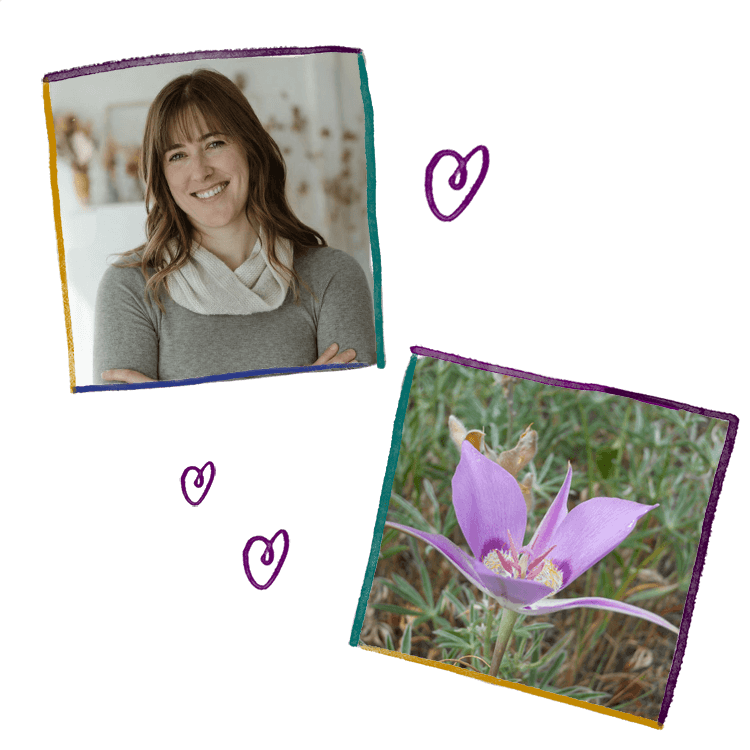
I started my journey towards becoming a therapist as a little kid, reading about my favorite characters with a flashlight under the covers.
As a kid, I was the one who stayed up reading long after everyone else had gone to sleep: flashlight under the covers, completely absorbed in whatever world a book had opened up. What I loved wasn't just the stories. It was the characters. I was drawn towards the way a good book could make you feel like you truly knew someone – their fears, their contradictions, what made them tick.
That pull to understand people never went away. It just grew up.
(Although, to be clear, I still stay up too late reading novels).
Today, I get to do the most interesting thing I can imagine: learn about people for a living. My clients would probably tell you I ask a lot of questions. That I find meaning in small things. That I notice themes underneath what someone is saying, not just the literal words they say. That they feel seen.
This is just who I am. And when you sit across from me in the therapy room, you'll feel it: I am genuinely, maybe a little relentlessly, curious about you. I also believe that curiosity should be practiced ethically – more on that below. (link to below section)




What it's like to work with me
I care deeply about being an excellent therapist, and I also care about being a real person in the room with you.
I've had mentors tell me that my greatest gift is my ability to show up as my authentic self: natural, attuned, and transparent. Therapy only works if you feel safe enough to be vulnerable, and it's hard to be vulnerable with someone who feels like they're performing "therapist" at you. I'd rather you feel like you're working with a human being who also happens to have a lot of training and expertise.
That said, I won't be scared to lead, either. Sometimes I'll reflect a pattern I'm noticing in you, even when it's a little uncomfortable to bring it up. Sometimes, with your consent, I might encourage you to try something new, to go somewhere you didn't know you needed to go. You might not even recognize it as a “challenge,” because oftentimes it will feel very gentle.
Because to me, therapy is a collaboration – we're working together to guide you to the places your brain needs to go to get unstuck. Your brain, your system, knows deep down where we need to go. I can help us find the map to get there.
On my commitment to this work
I am, without apology, a little obsessed with getting better at this.
At any given time, I'm probably reading two or three professional books at once, seeking mentorship and feedback on my work, and taking what people close to me describe as a truly ridiculous amount of continuing education. Not because I have to, but because I genuinely can't help it. The questions therapy asks about human beings are the same ones that kept me up reading as a kid. I'm not done yet.
What this means for you is simple: when you work with me, you're working with someone deeply committed to the craft – not just to having done the training, but to continuing to grow. That commitment to growth also means I'll ask you how therapy is going – and I'll really mean it. If something isn't landing, if you need something different, if you're not sure we're on the right track – I want to know. The therapeutic relationship works best when you can bring your real feelings, needs, and wants into the room, and trust that you'll be met there. One phrase I love is, 'Can we figure this out, together?'


Identity, ethical curiosity, and lived experience
Identity is an essential part of being human, and understanding who we are can be profoundly liberating. For example, I'm Swiss-American, and it wasn't until I visited Switzerland and learned more about my family's heritage that I truly understood certain parts of my mother, my grandmother, and myself. What I'd spent my whole life calling "picky" turned out to be something else entirely: a cultural value around care and precision. I was diagnosed with ADHD in my 30s, which I also found to be freeing. Suddenly, I could validate what had been hard for me and ask for more help, as well as lean into what I was genuinely good at — like finding unexpected connections between ideas.
While I do feel curiosity about who you are and want to acknowledge your identities, I also want to practice what Lucie Fielding calls ethical curiosity. This means that I strive to, as Fielding teaches us:
Ask myself if my desire to know serves you — "Who is this question for?"
Seek your consent before exploring parts of your life or identity
See you as a whole person, not a single facet of your identity
My Credentials
-
![]()
Bachelor of Arts in Psychology (with Honors) & Spanish
2013, Whitman College, Walla Walla, WA
-
![]()
Master of Science in Marriage and Family Therapy
2017 Seattle Pacific University, Seattle, WA
-
![]()
Sexual Health Certificate in Sex Therapy and Sex Education
2023 University of Michigan, Ann Arbor, MI



Selected Additional Training
Gottman Method Couple Therapy Level 1 & 2
Emotionally Focused Couple Therapy Externship
